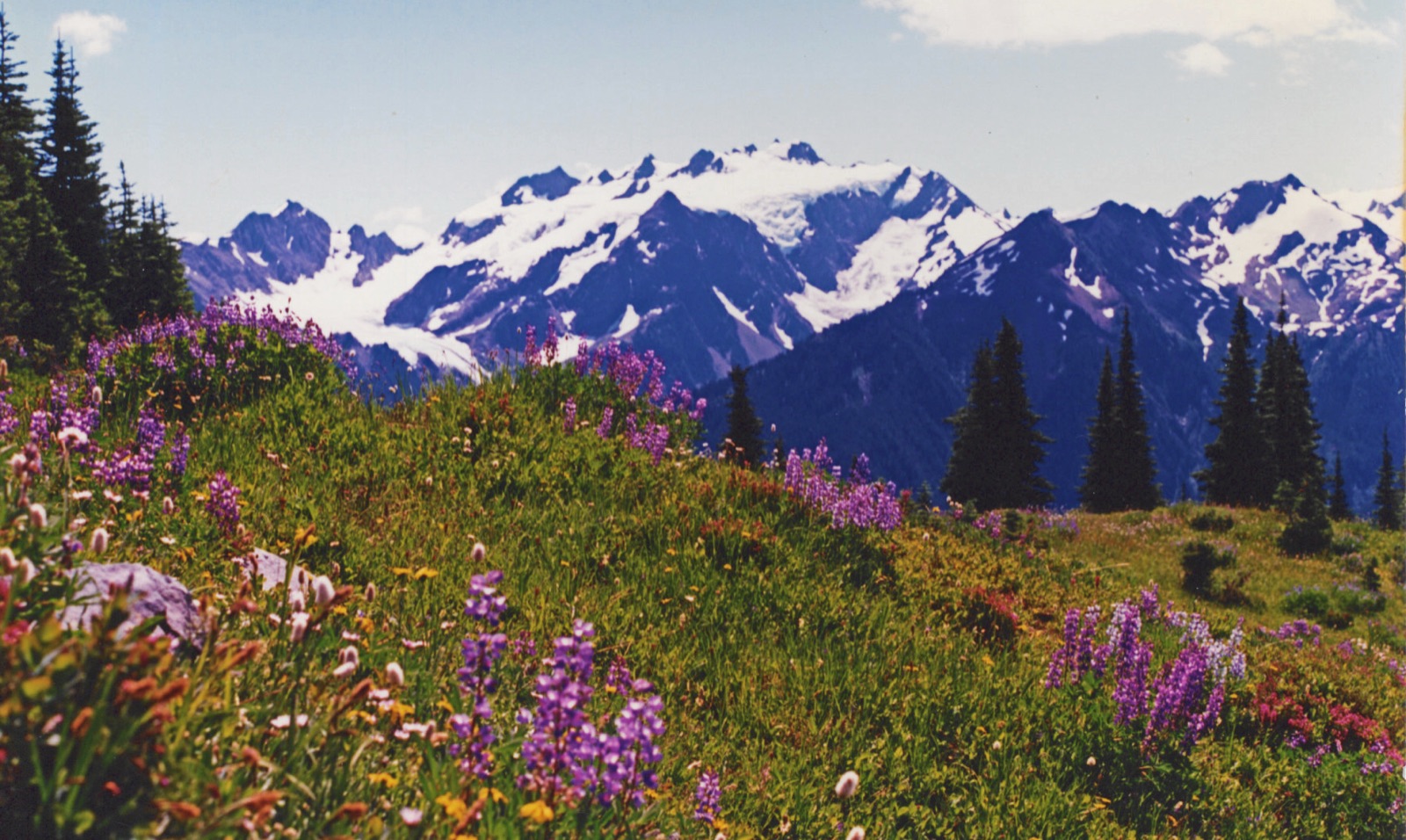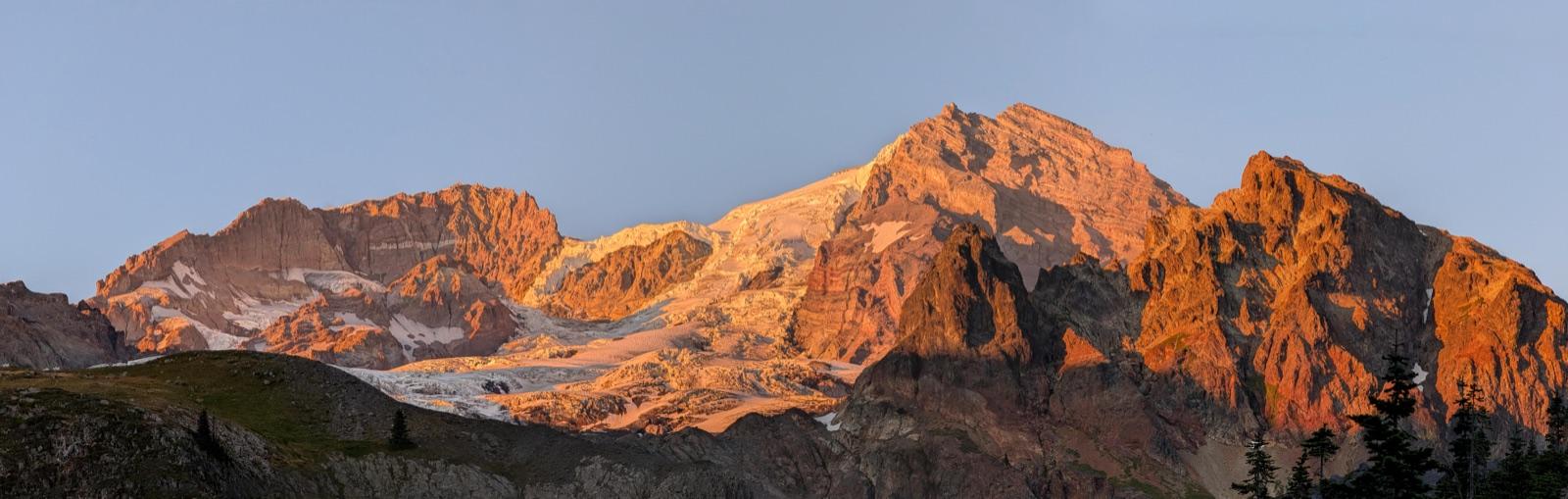
Panoramic Mount Rainier view from Emerald Ridge near the Wonderland Trail
Flagship volcano loop

Wonderland Trail

Mount Rainier National ParkVery strenuous
Best window
Late July - September
Booking opens
February lottery; general on-sale Apr 25
Distance (elevation)
94.1 mi
27,154 ft gain / 27,166 ft loss
Typical days
10-12 days
Trailhead
Longmire
Overview

One of America’s great backpacking loops, the Wonderland Trail circles Mount Rainier through deep river valleys, alpine camps, and long volcanic ridgelines that make the full circuit feel earned.

How to book

Booking the Wonderland Trail

Wonderland permits are built camp-by-camp, not as a single loop reservation. The strongest full-circuit itineraries usually come from the February early-access lottery, then any remaining reservable camps go on sale April 25. Roughly one third of the summer inventory stays first-come, first-served.

  • A permit is required year-round, but summer Wonderland demand clusters around complete multi-night itineraries and backup camp sequences.
  • Reservations still have to be activated in person at a Mount Rainier wilderness information center, and camps can fall back into the walk-up pool if the reservation holder does not show.
  • Mowich and Carbon access, melt-out timing, bridge issues, and group-site limits can all change whether a preferred loop is realistic on your dates.
Getting there & finishing

Access, transport, and finish logistics

Start

Longmire is the cleanest default full-loop anchor, but White River, Sunrise, Mowich, Box Canyon, and other trailheads can rescue an itinerary when the ideal camp sequence is gone.

Finish

A full circuit returns to the trailhead you start from, but many successful reservations start or finish elsewhere around the park once specific camps disappear. Keep alternate trailheads in play.

  • Food caches and permit pickup should be planned before you lock your camp sequence.
  • Road access is part of the route logic on Wonderland, not cleanup. West-side and northeast-side closures can force different starts or break a backup plan.
  • If you are using a non-Longmire trailhead, compare both the trail mileage and the current road status before treating it as an equivalent substitute.

Route map

Difficulty & terrain

How hard is the Wonderland Trail?

  • The loop is not just long. It stacks repeated 2,000- to 3,000-foot climbs and descents with a full pack for more than a week.
  • Early- or late-season snowfields can turn routine passes and traverses into slower, more consequential days than the mileage suggests.
  • Camp spacing is the real difficulty multiplier. A legal itinerary can still be a bad itinerary if it forces too many hard climbs back-to-back.
Recommended gear

What to carry for this route

  • Waterproof shell + real insulation
    Rainier weather shifts fast even in peak season
  • Trekking poles
    useful on repeated long descents and early-season snow patches
  • Food-cache plan + labels
    important if you are breaking the loop into longer stages
  • Current trail and road conditions
    check camp, bridge, and road status before permit pickup
  • Paper backup map or trip planner PDF
  • Blister and recovery kit
    the mileage is manageable only if feet and knees stay intact
Planning notes

Route notes

Flagship loop

The real challenge is campsite spacing, not just the total mileage.

Wonderland days swing hard between long valley traverses and big climbs. A route that looks reasonable on a mileage-only spreadsheet can still feel punishing once multiple 2,000-foot climbs stack up day after day.

This planner uses the official clockwise stage breakdown from Mount Rainier so you can quickly see whether a full circuit, a shorter section hike, or a slower 11- to 12-day plan fits your group better.

  • Longmire is the classic starting point because the full loop logic is easiest to compare there.
  • Golden Lakes, Mystic, Sunrise, Summerland, and Indian Bar are the stage anchors most itineraries revolve around.
  • Campgrounds like Mowich Lake and White River matter because they can make an itinerary salvageable when prime wilderness camps are gone.
Trip logistics

Food caches, melt-out timing, and closures should shape your backup plan.

A complete Wonderland itinerary is only as good as the roads and camps that stay accessible. Mowich access, snowfields, washed bridges, and trail maintenance can all change the best direction or the best start date.

If you are aiming for a full loop, build at least one alternate itinerary that shifts a couple of camps or shortens the route. That is often the difference between booking something great and walking away empty-handed.

  • Peak season reservations are competitive enough that backup camp sequences are worth planning in advance.
  • Food cache locations and permit pickup timing should be decided before you lock a start date.
  • Expect the ideal itinerary to change if bridges, roads, or snow conditions force a different west-side or northeast-side approach.
Trip FAQ

Common planning questions

Can I use this planner to sketch a full Wonderland Trail itinerary?

Yes. The route is modeled as the full clockwise loop with official camps so you can test whether your target mileage, camp spacing, and recovery days make sense before you enter the permit process.

Why does Wonderland stay planning-first instead of linking into a live tracker?

Mount Rainier reservations depend on complete multi-night camp itineraries, not a simple trailhead or zone watchlist. PeakPeeker needs itinerary-specific camp modeling before a live tracker will be accurate enough to ship.

How much does the starting trailhead matter on Wonderland?

A lot. Longmire is the cleanest default for comparing the full loop, but alternate trailheads can save a trip when the perfect camp sequence is gone or a road closure changes access on one side of the park.

Route references

Related routes

Similar trips to plan next

Planning estimates only. Verify permits, camps, maps, trail conditions, weather, and closures with official sources before travel.