Route overview
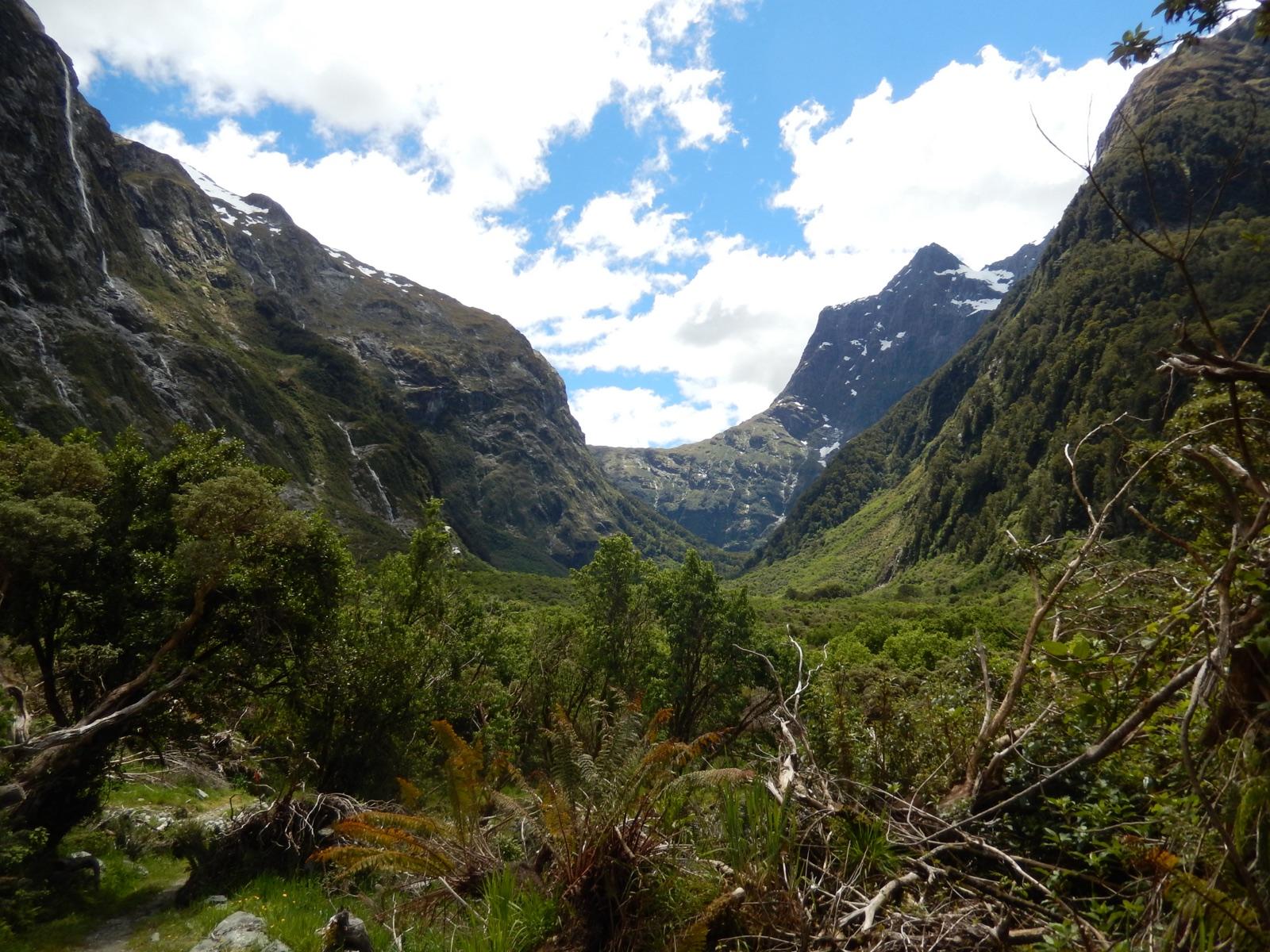
The mainstream line starts with the boat across Lake Te Anau to Glade Wharf, then moves up the Clinton Valley, over Mackinnon Pass, down to Dumpling Hut, and out to Sandfly Point above Milford Sound/Piopiotahi.
This planner keeps the route honest: it is a hut-based, point-to-point walk with one normal direction in the Great Walks season, not a flexible loop or a campsite mix-and-match route.
- The three standard overnight anchors are Clinton Hut, Mintaro Hut, and Dumpling Hut.
- The first day is short, the middle two days carry most of the route difficulty, and the final day is long enough that transport timing still matters.
When to hike
That is when DOC runs the managed Great Walks setup with the standard hut booking flow and the northbound independent-walker pattern. Even then, poor weather can still make the track feel serious very quickly.
Outside the Great Walks season the track remains a much bigger alpine and avalanche-management proposition with reduced facilities, shorter daylight, and more self-reliance required.
- Flooding, avalanche risk, and steep wet terrain can disrupt even in the core season.
- If you are not looking for a winter-style Fiordland challenge, stay inside the managed season.
When to book
DOC hut spaces for independent walkers are limited and the track is one of the hardest Great Walk bookings to land. It helps to think about the boats and road transfers at the same time as the hut nights rather than treating them as separate cleanup tasks.
- Lock the hut nights first, then make sure the Glade Wharf start boat and the Sandfly Point finish boat still line up.
- If you are building flights or long transfers around the walk, leave margin for Fiordland weather and notice-driven changes.
Getting there
Most independent walkers road-transfer to Te Anau Downs, then take the boat across Lake Te Anau to Glade Wharf. At the finish, Sandfly Point requires a boat back toward Milford Sound road connections.
- Treat the start boat and the finish boat as fixed route components, not optional extras.
- If your road transfers are tight, protect the finish day from avoidable delays.
Difficulty
The headline challenge is Mackinnon Pass day, but slippery roots, muddy valley sections, and heavy Fiordland rain can make every stage slower than a clean-weather mileage estimate suggests.
The route is not technical in the climbing sense, yet it is serious enough that weak footwear, poor weather layers, or tight transport timing can unravel a trip fast.
- Mintaro to Dumpling is the defining day because it stacks the Mackinnon Pass climb with a long descent.
- The final Dumpling to Sandfly stage is not extreme on paper, but it is still a full final day that should not be compressed carelessly around boat departures.
Gear list
Even with huts, this is still a route where waterproof layers, dry storage, warm camp clothes, and enough food for weather disruption matter more than shaving a small amount of pack weight.
- Carry a real waterproof shell, dry bagging, and a warm layer that still works after a soaked day.
- Bring enough food and stove fuel for the booked hut sequence plus a small weather margin.
- Footwear and blister management matter because wet trail and long descents are normal, not exceptional.